Ryanair profits drop as Iran war puts off passengers and lifts fuel costs
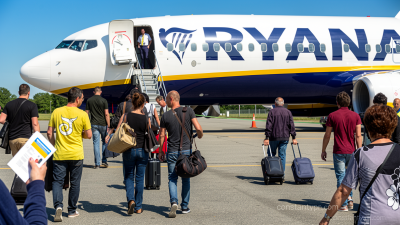
Ryanair profits drop as Iran conflict reshapes travel landscape
Constantvpn.com – Ryanair profits drop as Iran war continues to impact the airline industry, with the carrier reporting a significant decline in earnings amid soaring fuel costs and hesitant passengers. The Irish low-cost giant saw its pre-tax profits tumble by 34% to reach €593m (£503m) during the April to June period, while total sales remained flat as management implemented fare reductions to encourage bookings. This downturn comes as the Middle Eastern conflict creates uncertainty across the aviation sector, with Ryanair anticipating that summer fares will remain slightly below last year’s levels due to ongoing consumer hesitation about air travel.
Fuel costs surge amid escalating tensions
The financial pressure on Ryanair has been compounded by dramatic increases in jet fuel prices following military action in the region. Since the United States and Israel initiated strikes against Iran in February, fuelling expenses have escalated considerably. Although the airline had secured hedging agreements for the majority of its future fuel requirements, costs for uncovered volumes more than doubled during this period. Crude oil prices climbed to $90 (£67) per barrel for the first time in a month on Monday before experiencing a slight retreat, following intense weekend exchanges between American and Iranian forces. Meanwhile, maritime traffic through the strategically vital Strait of Hormuz—critical for worldwide oil and gas distribution—has essentially stopped.
An interim peace agreement reached last month provided temporary relief to energy markets, but prices rebounded sharply when diplomatic talks collapsed and hostilities resumed. The carrier cautioned that full-year results would remain “highly sensitive” to multiple external variables, including potential conflict escalation in both the Middle East and Ukraine, alongside unhedged fuel pricing. For the crucial July through September summer window, fares are projected to be “modestly” reduced compared to the previous year, with numerous travellers adopting a wait-and-see approach by booking closer to their departure dates.
Despite broader concerns, operational performance on certain routes remained strong. Neil Sorahan, the company’s finance chief, noted that flights serving popular Mediterranean destinations continued to operate at capacity. “People [are] as keen to get away as ever, albeit booking just a little bit later,” he explained. Financially, the airline managed to achieve a 1% revenue increase to €4.4bn during the second quarter, demonstrating resilience despite headwinds.
Passenger volumes experienced a 6% growth to reach 6.1 million travellers, buoyed partly by the Easter holiday period in April. However, average fares declined by 6% as the carrier lowered prices to attract flyers worried about the Iran situation. Market reaction was somewhat negative, with Ryanair’s share price dropping 5% on Monday. Russ Mould, investment director at AJ Bell, observed that while the airline occupies a stronger position relative to many competitors, “visibility is worse than San Francisco airport when the fog sets in.”
“The renewed escalation in hostilities in the Middle East is unhelpful and without a lasting resolution, challenging times for the airline and travel space look set to continue,” Mould added. Industry observers are closely monitoring how extended geopolitical instability might fundamentally alter travel patterns and airline operations across Europe and beyond.
“The renewed escalation in hostilities in the Middle East is unhelpful and without a lasting resolution, challenging times for the airline and travel space look set to continue.”
As the situation develops, Ryanair continues to navigate the complex intersection of rising operational costs and shifting consumer confidence, with the Iran conflict serving as a central factor in determining the airline’s near-term trajectory and profitability outlook.
