Enterprise VPN vs Consumer VPN: Key Differences You Need to Know

Introduction
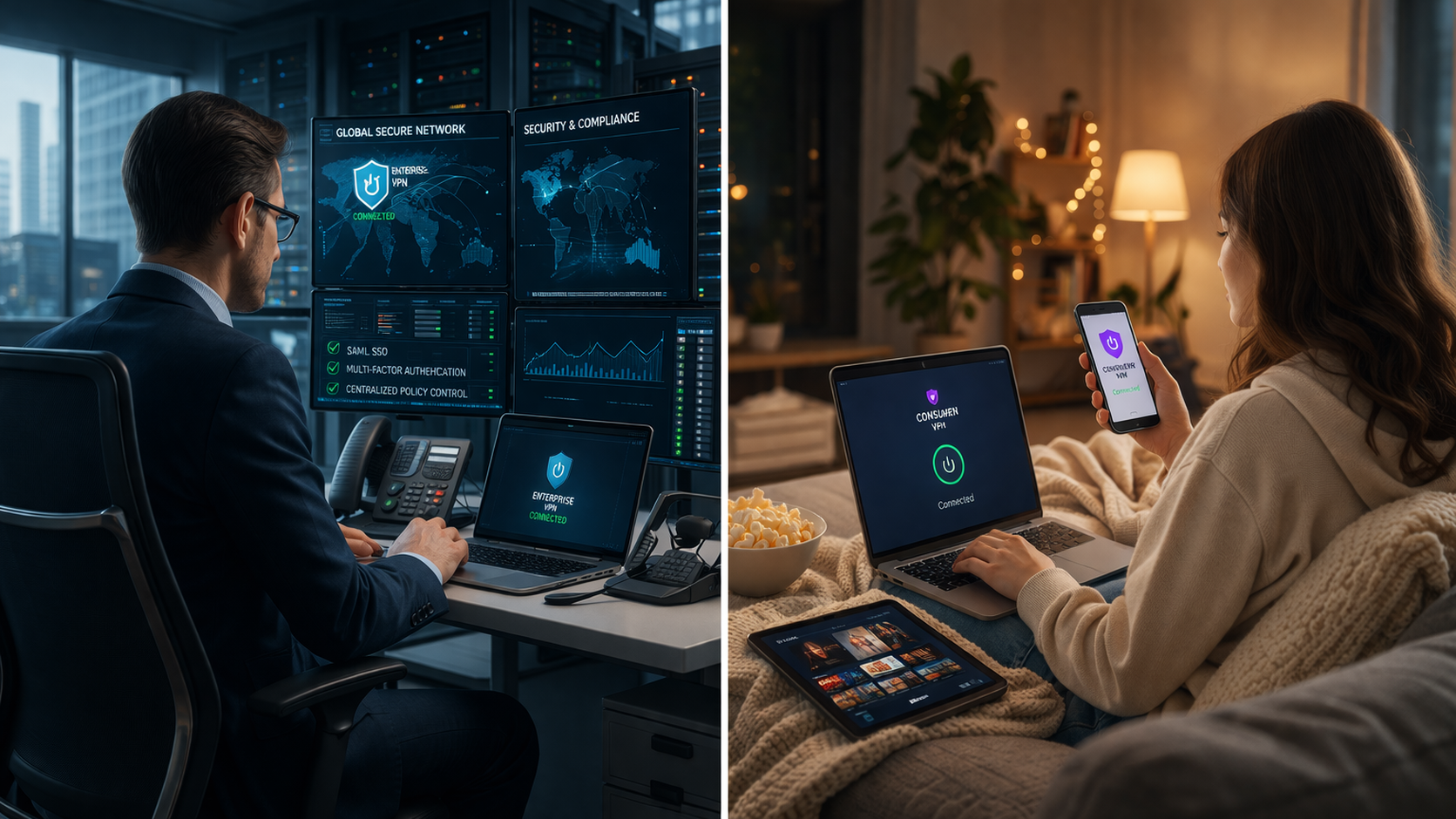
Constantvpn.com – When it comes to VPNs, understanding the enterprise VPN vs consumer VPN differences is essential for both businesses and individuals. While both types of VPNs aim to provide a secure and private internet connection, they serve very different purposes. Enterprise VPNs are designed for large organizations, offering high-level security and customizable features, while consumer VPNs cater to individuals seeking a secure, private browsing experience. In this article, we’ll dive into the key differences between these two types of VPNs, examining their features, functionalities, and ideal use cases.
Purpose and Use Cases
Enterprise VPNs: Designed for Businesses
An enterprise VPN is a robust and scalable solution built to meet the needs of large organizations with multiple employees across various locations. The primary purpose of an enterprise VPN is to create a secure, private network that connects remote employees, partners, and branch offices to the company’s internal systems. This type of VPN is typically used for accessing sensitive company data, internal applications, and servers while maintaining a high level of security.
Key Features of Enterprise VPNs:
– Scalability: Designed to support thousands of users simultaneously, enterprise VPNs can handle large traffic volumes.
– Customization: Offers customizable configurations based on the company’s specific needs.
– Advanced Encryption: Uses high-level encryption protocols like IPsec and SSL to ensure data privacy.
– Centralized Management: IT departments have full control over the VPN setup, user access, and security policies.
Consumer VPNs: Focused on Individual Privacy
In contrast, a consumer VPN is typically used by individuals who want to safeguard their online privacy. Consumer VPNs primarily focus on encrypting personal data and hiding users’ online activities from potential threats like hackers, trackers, or government surveillance. These VPNs are ideal for securing public Wi-Fi connections, protecting personal information, and bypassing geo-restrictions for streaming content.
Key Features of Consumer VPNs:
– User-Friendly: Simple and easy to install, making it accessible for people without technical expertise.
– Encryption: While consumer VPNs use encryption, the protocols (like OpenVPN or WireGuard) may not offer the same level of security as enterprise VPNs.
– Limited Customization: These VPNs generally offer fewer configuration options compared to enterprise solutions.
– Cost-Effective: Consumer VPNs are typically more affordable, offering a subscription-based model for individuals.
Security Features
Enterprise VPN Security: High-Level Protection
One of the primary differences between enterprise and consumer VPNs is the level of security offered. Enterprise VPNs provide much stronger security measures due to the sensitive nature of the data being transmitted.
Key Security Features of Enterprise VPNs:
– Multi-Factor Authentication (MFA): To further safeguard access to the network, enterprise VPNs often require additional layers of security such as MFA.
– Data Loss Prevention (DLP): Advanced DLP tools help prevent sensitive data from being transmitted out of the network without authorization.
– Compliance Standards: Enterprise VPNs often comply with industry-specific security standards like GDPR, HIPAA, or PCI DSS, ensuring the highest levels of protection.
– Granular Access Control: Enterprise solutions provide more control over who can access what data within the organization.
Consumer VPN Security: Basic Protection
Consumer VPNs, while still secure, tend to focus more on privacy and ease of use than the advanced protection required by businesses. They generally use strong encryption protocols but lack some of the specialized security features of enterprise VPNs.
Key Security Features of Consumer VPNs:
– Encryption: Standard encryption, such as AES-256, is common, offering strong protection for everyday use.
– Leak Protection: Many consumer VPNs include built-in features to prevent IP or DNS leaks that could expose users’ data.
– Limited Threat Detection: Consumer VPNs generally do not come with advanced threat detection or malware protection systems like enterprise solutions.
– No Custom Security Policies: Unlike enterprise VPNs, consumer VPNs do not allow users to configure granular security policies.
Performance and Speed
Enterprise VPNs: Optimized for Performance
Performance is a critical factor for businesses relying on VPNs to maintain their operations. Since enterprise VPNs are designed to handle significant data loads, they are optimized for performance, ensuring stable connections even under high traffic.
Enterprise VPN Performance:
– Dedicated Infrastructure: Enterprise VPNs often utilize dedicated servers, which help maintain connection speed and reliability.
– Load Balancing: Advanced load balancing techniques are employed to distribute traffic evenly across servers, preventing congestion and slowdowns.
– Higher Bandwidth: These VPNs are equipped with higher bandwidth, enabling faster data transfer speeds even with heavy usage.
Consumer VPNs: Trade-Off Between Speed and Privacy
For consumers, speed can sometimes be sacrificed for security and privacy. While most consumer VPNs provide decent speeds, they are not designed to handle heavy usage like enterprise solutions.
Consumer VPN Performance:
– Server Load Impact: As consumer VPNs often share servers among many users, performance can decrease if the server is congested.
– Bandwidth Limitations: Many consumer VPNs have bandwidth limits or throttling measures in place, which can impact the user experience.
– Variable Speeds: The speed of a consumer VPN often depends on factors such as server location, the number of connected users, and the encryption protocol used.
Cost and Affordability
Enterprise VPNs: High-Cost Investment
Due to their advanced features, scalability, and high-level security, enterprise VPNs come with a significant price tag. Businesses must factor in the costs of licensing, setup, maintenance, and ongoing support.
Costs Associated with Enterprise VPNs:
– License Fees: Most enterprise VPNs are sold via subscription or licensing models, often based on the number of users or devices.
– Implementation and Maintenance: Implementing an enterprise VPN involves additional costs for integration with existing systems, ongoing maintenance, and support.
– Custom Development: Large enterprises may require custom VPN development, which further increases the cost.
Consumer VPNs: Affordable for Individuals
In contrast, consumer VPNs are much more affordable and cater to individual budgets. Most consumer VPN services operate on a subscription model, typically costing between $3 to $12 per month.
Costs Associated with Consumer VPNs:
– Monthly/Annual Subscriptions: Consumer VPNs often offer various pricing plans based on duration, with discounts for long-term subscriptions.
– Free Versions: Some consumer VPNs offer free versions with limited features, although these may have restrictions on server locations, bandwidth, and speed.
Conclusion
The enterprise VPN vs consumer VPN differences are significant, with enterprise solutions offering robust security, scalability, and performance tailored to business needs. On the other hand, consumer VPNs provide a simpler, more affordable solution for individuals seeking privacy and security online. Understanding these differences helps you choose the right VPN solution based on whether you need advanced features for business operations or a straightforward, budget-friendly option for personal use.
FAQ
Q: What is the main difference between enterprise VPN and consumer VPN?
A: The primary difference is that enterprise VPNs are designed for large organizations with high-security needs, while consumer VPNs are tailored for individuals seeking privacy online.
Q: Can a consumer VPN be used for business purposes?
A: While a consumer VPN can be used for small business purposes, it lacks the advanced features and scalability required by larger enterprises.
Q: Are enterprise VPNs more secure than consumer VPNs?
A: Yes, enterprise VPNs typically offer more advanced security features, such as multi-factor authentication and compliance with industry standards, making them more secure than consumer VPNs.
Q: How much do enterprise VPNs cost?
A: Enterprise VPNs can be expensive, with costs varying based on the number of users, required features, and custom development, often ranging from hundreds to thousands of dollars annually.
Q: Is a consumer VPN sufficient for general internet browsing?
A: Yes, a consumer VPN is usually sufficient for individual internet browsing, offering privacy protection and security while using public Wi-Fi networks.
