EU proposes slowing down cuts to carbon emissions for businesses
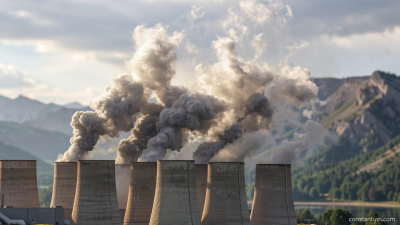
EU Proposes Slowing Down Cuts to Business Emissions
EU proposes slowing down cuts to carbon – The European Union has unveiled significant reforms that would slow down the pace of carbon emission reductions for businesses across the bloc. Under the new proposal, the EU proposes slowing down cuts to greenhouse gas limits through modifications to its emissions trading system, giving industries more flexibility in meeting climate targets. This represents a substantial shift in the EU’s approach to environmental regulation, balancing ambitious climate goals with economic considerations for member states.
The Emissions Trading System, introduced in 2005, serves as the EU’s primary mechanism for controlling greenhouse gas emissions. The proposed changes would allow certain industries to extend their emission allowances until 2038 instead of the originally planned 2034 deadline, provided they commit to meaningful decarbonisation investments. EU climate commissioner Wopke Hoekstra welcomed the approach, stating: “We are adopting a more business-friendly and, may I say so, savvy approach.”
Key Changes to the Emissions Trading System
The European Commission outlined that these modifications would help align the ETS with the bloc’s ambitious target to reduce carbon emissions by 90% by 2040 compared to 1990 levels. The system requires Europe’s industries and power plants to purchase permits for every tonne of carbon dioxide they emit, creating financial incentives for cleaner technologies. Companies can either purchase additional permits or trade them on the market, while some businesses receive free allowances to maintain competitiveness against international rivals.
Under the revised framework, the EU proposes slowing the annual reduction rate of the emissions cap to approximately 3.7% from 2031, decreasing further to 1.7% from 2036. This represents a notable adjustment from the current 4.3% reduction rate. Additionally, the EU proposes extending free permit allocations until 2038 rather than the previously scheduled 2034 end date, when carbon border charges were intended to replace them for certain sectors.
The Commission would also provide 80% of free permits upfront to companies demonstrating concrete decarbonisation investment plans within Europe. The remaining 20% would be distributed once these investments materialize. This two-tier approach aims to encourage immediate commitment while rewarding actual implementation of green technologies.
Reactions to the proposal have been mixed across member states. Polish climate minister Paulina Hennig-Kloska expressed strong support, noting: “For the first time, we are seeing a softening of the stance rather than a toughening of it – this is a huge success for Poland. Although we will fight for more.”
However, environmental advocates have raised concerns about the potential impact. German European Parliament member Michael Bloss warned that the plans could result in “gigantic climate pollution,” potentially affecting future generations’ quality of life. The debate comes as Europe experiences increasingly severe climate impacts, with more than a dozen countries breaking June temperature records this year. Nations including Hungary, the Czech Republic, and Germany recorded temperatures exceeding 40°C during recent heatwaves.
The proposals still require approval from EU countries and lawmakers, a process expected to take approximately one year. As Europe continues to warm at an accelerated pace compared to global averages, policymakers face mounting pressure to balance economic competitiveness with environmental responsibility in shaping the continent’s climate future.
