JD Vance accuses Israel of ‘manipulating’ US public opinion to prolong Iran war
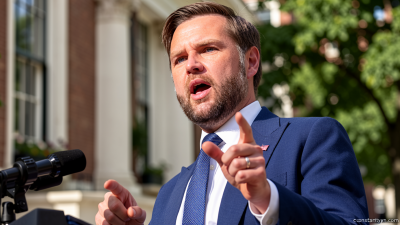
JD Vance Accuses Israel of Manipulating US Public Opinion
JD Vance accuses Israel of manipulating – US Vice-President JD Vance has accused certain members of the Israeli government of attempting to influence American public opinion in order to prolong the ongoing conflict with Iran. During a recent interview with conservative podcaster Joe Rogan, Vance expressed his concerns about what he perceives as a coordinated effort. While acknowledging that he trusts some Israeli officials, Vance specifically identified others “who are manipulating and trying to change American public opinion to keep the war going on indefinitely.” The Israeli government has not yet issued an official response to these allegations.
Foreign Influence on American Policy
White House Press Secretary Karoline Leavitt addressed the issue on Thursday, stating: “I think the president would certainly agree that, yes, foreign countries certainly do try to persuade American public opinion.” During his appearance on The Joe Rogan Experience, Vance elaborated on his concerns, explaining that certain Israeli officials have been working to shift US policy away from diplomatic negotiations with Iran. “I definitely think you have seen this very discreet, extremely well-funded campaign to try to derail the negotiation and try to derail the deal,” Vance explained, noting that there is “exact evidence” demonstrating that some Israeli leaders “hate the deal.”
The United States reached a significant agreement with Iran last month, formally known as the memorandum of understanding (MOU). This comprehensive arrangement allowed for the continuation of formal negotiations between the two nations. It also included a now-abandoned 60-day ceasefire period and established conditions for reopening the strategically important Strait of Hormuz. However, tensions over the Strait have recently resurfaced, prompting the United States to intensify its military strikes on Iran while Tehran has simultaneously targeted American allies throughout the region.
“What bothers me is actually when Americans allow, meaning American leadership allows, that influence to affect their judgement and to affect what they are advocating for,” Vance said during his interview.
Vance has been heavily involved in the diplomatic efforts regarding Iran, attending crucial negotiations in Pakistan during April and traveling to Switzerland in June for the signing of the memorandum of understanding. He told Joe Rogan that he “doesn’t mind” what he described as “certain elements of the Israeli government” criticizing the US position, adding that “foreign governments trying and influence the government all the time.” His concerns center on American leadership allowing foreign influence to shape their decisions rather than the influence itself.
This represents the latest in a series of criticisms the vice-president has recently made against Israel as the Trump administration continues to pursue multiple strategies for ending the conflict. These approaches include both diplomatic negotiations and renewed military strikes. In June, Vance urged Israeli political leaders to extend the ceasefire between the two countries, warning them not to attack “the only powerful ally” they have “anywhere left in the entire world.” The US and Israel had previously launched wide-ranging strikes on Iran in February, which prompted Tehran to respond by launching attacks on Israel and US-allied states in the Gulf region. The fighting has also spread to Lebanon, further complicating the regional situation.
Israel considers Iran a significant threat to its existence and has consistently advocated for the complete removal of Iran’s nuclear and missile programme, as well as regime change. Meanwhile, the House of Representatives on Wednesday rejected a measure that would have cut billions of dollars-worth of US aid to Israel. The motion failed by 314 votes to 104, with several Democrats voting in favour of ending the funding. This outcome reflects a notable shift within the Democratic party away from supporting Israel unequivocally, suggesting changing attitudes toward Middle Eastern policy in American politics.
