Explainer: Who is Mojtaba Khamenei and how did he succeed his father?
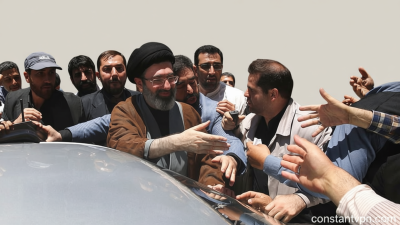
Explainer: Who is Mojtaba Khamenei and how did he succeed his father?
The Islamic Republic’s Assembly of Experts recently confirmed Mojtaba Khamenei as the new Supreme Leader, succeeding his 86-year-old father, Ali Khamenei, following an Israeli airstrike that targeted the leadership’s headquarters. This transition occurs amid heightened tensions in the region, marking Mojtaba as the third individual to hold the title since the revolution.
Known as a prominent yet enigmatic figure in Iran’s theocratic system, Mojtaba Khamenei has remained largely out of public view since the attack. His father’s death and the concurrent loss of his mother, Zahra Haddad Adel, who was linked to the country’s religious hierarchy, have intensified speculation about his rise to power.
Early Life and Strategic Path
Mojtaba was born in 1969 in Mashhad, a city deeply rooted in Iran’s Islamic identity. His career, as noted by political commentators, followed a calculated route—from his formative years in the Iran-Iraq War to his eventual entry into Iran’s top religious and security echelons. This path solidified his alliance with military leaders and key figures in the Islamic Revolutionary Guard Corps (IRGC).
“From teenage years spent on the battlefields of the Iran-Iraq war to the highest religious and security circles of the Islamic Republic,” analysts say, “Mojtaba’s trajectory underscored his commitment to power structures.”
Unlike his older brother Mostafa, who occupied cultural and administrative roles, Mojtaba distinguished himself by embedding himself in Iran’s shadowy political networks. While his brothers stayed within the leadership’s framework, Mojtaba’s influence extended into security institutions, setting him apart as a figure of strategic importance.
Financial Influence and Political Ambiguity
Recent Western reports have highlighted Mojtaba’s potential financial power, labeling him a “billionaire” with significant assets in cities like London and Vienna. However, the exact control over these holdings remains unclear due to the opaque financial systems tied to Iran’s ruling elite.
Within Iran, Mojtaba is not publicly referred to as a businessman. Experts suggest his economic sway stems from his political stature and connections to state-backed entities, rather than personal ventures. His ideological leanings, meanwhile, remain a subject of debate, with some viewing him as a hardliner in the security sector and others noting his lack of public policy statements.
War Experience and Legacy
During the mid-1980s, Mojtaba—then a teenager—was deployed to the front lines. He joined the Habib ibn Mazaher Battalion of the 27th Mohammad Rasulullah Division, a unit renowned for its ideological fervor. This experience, though brief, helped him forge critical relationships with IRGC commanders, many of whom later rose to prominence.
Among those associated with the battalion were figures like Qasem Soleimani and Ahmad Kazemi, who became pillars of Iran’s security apparatus. For his generation, wartime service symbolized loyalty and credibility, a legacy Mojtaba now carries into his leadership role.
