Huge crowds in Mashhad as Iran’s late supreme leader is buried
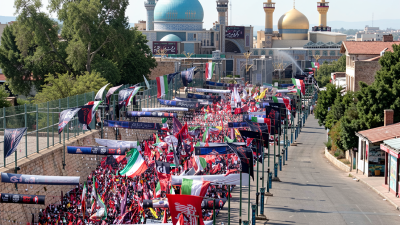
Massive Gatherings Mark Khamenei’s Final Resting Place in Mashhad
Huge crowds in Mashhad as Iran – Thousands of mourners filled the streets of Mashhad, Iran’s sacred city, to pay their last respects to Ayatollah Ali Khamenei, the nation’s recently deceased supreme leader. The solemn procession wound its way toward the magnificent gold-domed Imam Reza shrine, where Khamenei would be interred following an extensive week of national mourning that spanned five Iranian cities and extended into neighboring Iraq.
A Nation in Mourning
The burial ceremony, confirmed by state news agency IRNA, arrived at a critical juncture in regional affairs. Just days before, Iran and the United States had exchanged military strikes that now threaten to undermine a preliminary agreement aimed at concluding the conflict in which Khamenei lost his life. Earlier that same day, Iran’s Revolutionary Guards issued accusations that American forces had bombed two bridges along the railway connecting Tehran to Mashhad during the night, allegedly attempting to diminish the significance of the funeral proceedings.
Khamenei and multiple family members perished when an Israeli strike targeted his Tehran residence on February 28, coinciding with the opening day of Iran’s war against both the United States and Israel. His son Mojtaba, aged 56, assumed the role of supreme leader following the tragedy but has remained largely absent from public view after reportedly sustaining serious injuries during the same attack. Mojtaba did not participate in funeral ceremonies held in Tehran and Qom, and no evidence emerged suggesting his presence at the Mashhad burial.
Processions Through Holy Cities
On Thursday morning, an aircraft carrying the coffins of Ali Khamenei, his granddaughter, son-in-law, daughter, and Mojtaba’s wife touched down in Mashhad after completing a journey from Iraq. There, enormous crowds had already participated in processions visiting two prominent Shia shrines located in the cities of Najaf and Karbala.
Television broadcasts captured thousands of mourners clad in black garments walking along Mashhad’s central boulevard throughout the afternoon. Many participants waved Iranian flags alongside red banners representing vengeance. Others carried photographs of the late supreme leader and placards demanding the death of United States President Donald Trump, who together with Israeli Prime Minister Benjamin Netanyahu authorized the joint assault on Iran four months earlier that ignited the war.
“The loss of the leader is heavier than losing our parents,” Hoda, a 35-year-old housewife, told AFP news agency. “Only the death of Trump and Netanyahu will soothe our pain.”
A Legacy of Leadership
Khamenei’s origins trace back to Mashhad, Iran’s second-largest metropolis situated in the country’s northeastern region. He pursued religious studies at seminaries within the city before relocating to Qom, which serves as the epicenter of Iran’s Shia clerical establishment. Following the passing of Ayatollah Ruhollah Khomeini, the Islamic Republic’s founding father, Khamenei received his appointment as supreme leader in 1989.
Throughout his three-decade tenure, Khamenei maintained authoritative control over Iran’s political landscape and military apparatus while suppressing domestic opposition through both diplomatic and violent means. His foreign policy consistently reflected hard-line positions regarding confrontations with American and Israeli interests.
The meticulously organized funeral ceremonies sought to demonstrate national unity and resilience following a war claiming thousands of lives and January protests where security force crackdowns resulted in additional casualties. Nevertheless, renewed tensions with the United States complicated the mourning period. President Trump cautioned that American military operations might intensify following a second consecutive night of strikes on Thursday, which the US military characterized as efforts to diminish Iran’s capacity to threaten commercial vessels navigating the Strait of Hormuz.
In response, the Revolutionary Guards announced that Iranian forces had targeted American military installations and infrastructure across Kuwait, Bahrain, and Qatar. These developments followed a memorandum of understanding signed three weeks prior between Washington and Tehran, establishing a framework for ending hostilities on all fronts and reopening the strategic waterway. The agreement also provided both nations two months to negotiate a comprehensive settlement addressing Iran’s nuclear program and American sanctions.
“Resistance and revenge – Iran wanted to send a message with its farewell to Khamenei,” noted Bowen in his analysis.
As evening descended upon Mashhad, a lorry slowly conveyed Khamenei’s coffin through the assembled crowds toward the Imam Reza shrine complex. The mausoleum, dating to the ninth century and distinguished by its towering golden dome and minarets, stands as the only site among twelve Shia imams believed to contain a burial within Iran’s borders. Millions of pilgrims visit this sacred location annually, making it an especially fitting final resting place for Iran’s spiritual and political leader.
