US and Iran trade strikes after tankers hit in Strait of Hormuz
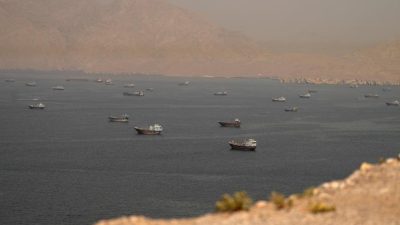
US and Iran Trade Strikes Following Tanker Attacks in Strait of Hormuz
US and Iran trade strikes after – On Tuesday, the United States launched a series of strikes targeting Iranian infrastructure in response to assaults on three oil tankers in the Strait of Hormuz, a vital maritime route for global energy trade. Iranian state media reported that the attacks left a blaze in the country, with multiple locations hit by U.S. forces. The U.S. Central Command (Centcom) stated that over 80 targets were struck, including missile launch sites and command centers, as part of a broader effort to impose significant costs on Iran for its actions. These strikes followed a series of incidents where tankers were attacked, prompting the U.S. to assert that the assaults were “wholly unacceptable” and required a swift reaction.
Iran’s Retaliatory Measures
In retaliation, Iran launched missile and drone attacks on U.S. military sites in Bahrain and Kuwait. The Islamic Revolutionary Guard Corps (IRGC) claimed these strikes targeted “85 key U.S. military facilities,” including a Navy headquarters and an air base. Iran’s speaker, Mohammad Bagher Ghalibaf, accused the U.S. of violating the Memorandum of Understanding (MoU) signed between the two nations last month. He listed several grievances, including “violating Iranian adjustments in the Strait,” “persistent threats of further strikes,” “reinstating oil sanctions,” and “attacks on southern Iran.” Ghalibaf emphasized that Iran would no longer tolerate “bullying and extortion,” stating that the country would “take whatever measures it considers necessary to safeguard its national interests and security.”
“The era of bullying and extortion is over. It leads nowhere. We don’t fold,” Ghalibaf said.
The U.S. response was framed as a necessary step to protect commercial shipping, with Centcom highlighting that the strikes were aimed at “imposing heavy costs for targeting and attacking commercial shipping crewed by innocent individuals in an international waterway.” The agency confirmed that in addition to 60 small boats, it had hit Iranian missile launch sites and command centers, though the exact locations were not disclosed. This action followed the U.S. Treasury’s decision to revoke a waiver that had temporarily eased oil sanctions on Iran, a move Iran called a breach of the MoU.
International Responses
As the conflict escalated, NATO’s chief, Mark Rutte, defended the U.S. strikes, calling them “absolutely necessary” during a summit in Ankara, Turkey. Rutte argued that Iran had “basically violated the ceasefire” after attacks on ships in the strait, stressing that the U.S. was “totally crucial” in its forceful response. Meanwhile, Kuwait expressed concern over the Iranian strikes, denouncing the “repeated attacks” on its territory and warning of potential long-term consequences.
“I think it was absolutely necessary,” Rutte said. “I think it is totally crucial that the U.S. forcefully [reacts].”
Qatar and Saudi Arabia also condemned the attacks, each claiming a tanker from their countries had been hit while navigating the strait. Qatar’s foreign ministry spokesperson, Majed Al Ansari, stated that Iran was “fully responsible” for an assault on the vessel Al-Rekayyat, which was transiting near the strait. Saudi Arabia’s foreign ministry, in a separate social media post, accused Iran of targeting the Saudi tanker Wadyan as it crossed the strait. Iran’s foreign ministry spokesman, Esmail Baghaei, countered these accusations, calling them “contrary to the principle of good neighbourliness.” He noted that commercial vessels using uncoordinated routes or tampering with tracking systems risked collision, disrupting Iran’s efforts to ensure “safe transit” in the region.
Escalation in the Strait of Hormuz
The incidents in the strait sparked renewed tensions between the U.S. and Iran, with both sides accusing each other of breaking agreements. Before the U.S. strikes, the UK Maritime Trade Organisation (UKMTO) reported that a tanker had caught fire after an unknown projectile struck its engine room on Monday. In two separate attacks on Tuesday, other tankers were hit as they exited the strait but managed to continue to their next ports of call. One vessel sustained minor structural damage, according to the UKMTO, while others were able to avoid major disruptions. These incidents underscored the strategic importance of the strait, a narrow passage where a single strike could disrupt global oil supply chains.
The U.S. and Iran had previously agreed on a 14-point memorandum of understanding (MoU) aimed at extending a ceasefire and reducing hostilities across all fronts. This agreement was reached last month, with both nations pledging to hold talks to define the “future administration” of the strait. However, the recent attacks and retaliatory strikes have threatened to derail this progress. Iranian officials warned that Tehran would “take decisive measures” to address what they called a violation of the MoU by the U.S., emphasizing the country’s commitment to protecting its interests.
Broader Implications
The conflict has raised concerns about the stability of the Gulf region and the potential for further escalation. Analysts note that the Strait of Hormuz is a critical chokepoint for over 20% of the world’s oil, making it a prime target for both economic and military leverage. The U.S. actions, while intended to deter Iran, have also heightened the risk of a larger confrontation, particularly with Iran’s allies in the region. The revocation of the oil waiver by the U.S. Treasury added to the pressure, signaling a shift toward tightening sanctions and reasserting control over Iran’s energy exports.
As the situation unfolds, the mutual strikes have highlighted the deepening divide between the U.S. and Iran. While the U.S. insists its actions are a response to Iran’s aggression, Tehran views them as an overreach, accusing Washington of failing to uphold its commitments. The broader implications of these strikes could affect regional alliances, international oil markets, and the ongoing diplomatic efforts to stabilize the Gulf. With both sides continuing to escalate their posturing, the prospect of a prolonged conflict looms, testing the limits of the ceasefire and the effectiveness of the MoU.
