Australia dock workers call for 28-hour week in AI talks
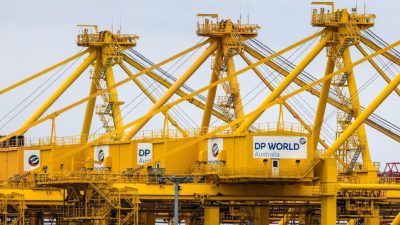
Australian Dock Workers Advocate for 28-Hour Week Amid AI Expansion
Australia dock workers call for 28 hour – As artificial intelligence (AI) and automation reshape the landscape of port operations across Australia, dock workers are uniting to demand a 28-hour work week without any reduction in pay. This call for a shorter work schedule comes amid growing concerns about job displacement and the social impact of technological advancements on the labor force. The Maritime Union of Australia (MUA) has emerged as a key voice in the debate, asserting that the adoption of AI must prioritize workers’ livelihoods over corporate profits.
Union Warns of Job Risks in AI-Driven Shifts
The MUA’s stance reflects broader anxieties within the maritime sector about the potential for automation to disrupt traditional roles. According to the union, DP World—a major port logistics company—has positioned itself as a leader in integrating AI technologies, placing workers in direct competition with machines. The union’s statement on 3 July emphasized that the company’s push for automation should not come at the expense of employment stability, stating,
“If DP World wants AI and automation, then they must pay the social dividend. The new technology doesn’t have to cost our members their jobs or put their livelihoods at risk just so a terminal operator can boost profits.”
This sentiment underscores the belief that AI’s benefits should be shared with the workforce, rather than eroded by efficiency gains.
DP World, which operates in 84 countries and employs over 126,000 people globally, is at the forefront of this technological transformation. The company’s recent experiments with AI tools to manage employee tasks and scheduling have sparked debates about the future of labor in the industry. A study conducted by the Centre For International Corporate Tax Accountability and Research, commissioned by the MUA, revealed that these innovations are being implemented with minimal consultation, raising fears of significant job losses.
Automation Threatens Thousands of Roles
The report suggests that DP World’s automation program could jeopardize up to a thousand positions, representing over 60% of the dock and maintenance workforce. This projection includes the potential deployment of AI-assisted remote-control cranes and driverless vehicles, which could streamline operations but also reduce the need for human labor. The MUA has argued that such measures should not be used to eliminate jobs but instead to enhance working conditions and support employees through the transition.
Currently, DP World’s dock workers in Australia are estimated to work between 32 and 35 hours per week, depending on their location, as noted by the Australian Financial Review. This figure highlights the existing workload and the union’s push to reduce it further. The MUA’s position is clear: any shift toward AI must be accompanied by fair compensation and safeguards for workers. The union’s broader goal is to ensure that technological progress aligns with social equity, rather than exacerbating economic inequality.
Global Impact of DP World’s Operations
DP World’s influence extends far beyond Australia, where it manages millions of shipping containers annually through key ports in Sydney, Melbourne, and other regions. As one of the world’s largest port operators, the company is deeply integrated into global supply chains, with its operations linked to the movement of goods across continents. The firm’s reliance on AI is part of a larger strategy to optimize efficiency in an increasingly complex international trade environment.
Last year, Glen Hilton, DP World’s Asia Pacific chief executive, acknowledged that AI is no longer a luxury but a necessity in managing modern supply chains. “The use of the technology is ‘no longer optional’ but essential,” he stated, emphasizing the need for automation to keep pace with global demands. However, the MUA argues that this essential adoption should not be achieved at the cost of workers’ security, calling for a more balanced approach to technological integration.
DP World’s Role in Australia’s Port Sector
DP World’s operations in Australia are central to the country’s container shipping infrastructure, handling approximately 40% of all container movements. This significant market share gives the company considerable leverage in shaping labor policies and working conditions. The union has criticized the lack of transparency in DP World’s plans, suggesting that the company’s focus on automation may prioritize profit margins over employee well-being.
The study commissioned by the MUA highlights a pattern of AI implementation that often bypasses meaningful dialogue with workers. According to the findings, the company has been testing AI tools to monitor and streamline operations, including workforce management systems that could predict labor needs with precision. While these innovations aim to reduce costs and improve efficiency, they also threaten the stability of jobs that have long supported local communities.
Broader Implications for the Workforce
As AI becomes more pervasive in port operations, the MUA is positioning itself as a advocate for workers in the face of rapid industrial change. The union’s demand for a 28-hour work week is not just about reducing hours but ensuring that the shift to automation is equitable. “The technology should be used to improve workers’ lives, not destroy them,” the MUA reiterated in a statement, framing the debate around the balance between innovation and job preservation.
With the potential for AI to automate up to 60% of roles in the dock and maintenance sectors, the MUA is urging DP World to adopt a model that includes retraining programs, wage adjustments, and opportunities for workers to adapt to new technologies. The union’s approach emphasizes collaboration, suggesting that AI could be a tool for empowerment rather than displacement. However, the challenge lies in ensuring that such a transition benefits both the company and its employees.
DP World’s expansion into AI is part of a global trend, with similar initiatives underway in ports across Europe, Asia, and the Americas. The company’s ability to handle a tenth of global container traffic underscores its critical role in international trade. Yet, the MUA’s concerns highlight a growing tension between technological advancement and the human workforce, a conflict that is likely to intensify as automation continues to evolve.
The BBC has reached out to DP World for additional insights and to clarify its stance on the union’s demands. While the company has not yet issued a formal response, its continued push for AI integration suggests that the debate over work hours and job security will remain a focal point in the coming months. For now, dock workers in Australia are preparing for negotiations that could redefine their role in an automated future.
