Why an anti-sacrilege law in India’s Punjab has sparked controversy
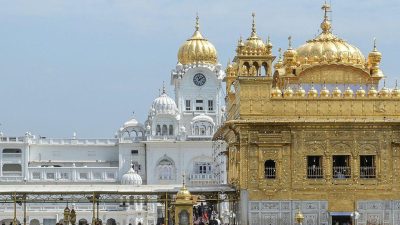
Controversy Erupts Over Punjab’s New Anti-Sacrilege Law
Why an anti sacrilege law in India – In a recent development, the Aam Aadmi Party (AAP) government in India’s northern state of Punjab has introduced a new law aimed at enhancing penalties for sacrilege against the Guru Granth Sahib, the central Sikh holy scripture. This legislative move has ignited a heated debate, with the Akal Takht—a revered institution representing both spiritual and temporal authority within the Sikh community—raising concerns about its scope and implications.
Defining Sacrilege in Legal Terms
The proposed law marks the first time sacrilege against the Guru Granth Sahib is formally defined under legal frameworks. It criminalises acts such as deliberate desecration, damage, burning, tearing, theft, or defacement of the scripture. Additionally, it targets words, signs, or electronic messages designed to insult or undermine Sikh religious sentiments. Offences under this law are classified as cognisable and non-bailable, empowering police to detain suspects without a warrant and complicating the process of securing bail.
Penalties for such acts range from seven to 20 years in prison, coupled with fines from 200,000 to one million rupees. The law also allows for steeper punishments if the crime is part of a broader conspiracy to destabilise religious harmony or public order. These provisions are intended to serve as a deterrent, with the AAP government arguing that they would ensure stricter adherence to the sanctity of Sikh holy texts.
“Punjab’s third attempt in a decade to tackle sacrilege has finally materialised,” stated Bhagwant Mann, the state’s Chief Minister, defending the law. “This legislation addresses long-standing issues and reinforces the importance of protecting our religious heritage.”
Akal Takht’s Criticisms
The Akal Takht has emerged as a vocal opponent of the law, asserting that it extends beyond its original intent. While the law focuses on punishing sacrilege, the institution claims it encroaches on matters traditionally managed by Sikh religious bodies. Specifically, it challenges the administrative regulations surrounding the handling, registration, and custody of the Guru Granth Sahib, arguing that these rules were not discussed with the community before enactment.
According to the Akal Takht, the law introduces a layer of state control over sacred practices, potentially undermining the autonomy of Sikh institutions. “This legislation does not merely criminalise sacrilege; it also dictates how our holy scripture is treated in everyday life,” a representative from the Akal Takht stated. The controversy has drawn attention to the balance between legal enforcement and religious freedom, with critics fearing the law may set a precedent for broader state intervention in religious matters.
Historical Context and Political Implications
The debate over punishing sacrilege against the Guru Granth Sahib is not new. For years, Sikh groups have pushed for stricter legal measures to address perceived threats to their religious texts. The issue gained significant traction in 2015, when allegations of desecrating the Guru Granth Sahib sparked widespread protests across Punjab. In Behbal Kalan, police actions against demonstrators resulted in two deaths, transforming the issue into a political and religious flashpoint.
The 2015 incidents are widely believed to have contributed to the defeat of the Shiromani Akali Dal-Bharatiya Janata Party (SAD-BJP) government in the 2017 elections. The subsequent Congress government faced criticism for its slow handling of the case, which further intensified demands for a more robust legal framework. Delivering justice in unresolved sacrilege cases became a key campaign promise for the AAP in the 2022 elections, prompting them to revive investigations and eventually introduce the current law.
However, the path to enacting the law was not straightforward. In 2016, the SAD-BJP government first proposed a law that would impose life imprisonment for desecrating the Guru Granth Sahib. Despite its intent, the federal government rejected it, citing concerns about its exclusivity to Sikh religious interests and its potential conflict with India’s constitutional principles of secularism. The Congress government then tried again in 2018, broadening the scope to include other sacred texts like the Bhagavad Gita, the Quran, and the Bible. Yet, these bills never gained presidential approval and remained in limbo.
Revisiting the 2008 Act
This year’s law represents a departure from earlier efforts, with the AAP government amending the existing Jaagat Jot Sri Guru Granth Sahib Satkar Act of 2008. The original 2008 legislation regulated the printing, publication, and distribution of the Guru Granth Sahib, prohibiting unauthorised versions. While it addressed some aspects of sacrilege, critics argue it lacked the severity needed to address modern challenges.
The new law builds on the 2008 act by introducing more stringent penalties and expanding its reach. It also empowers the state government to create implementing rules, which has raised questions about the centralisation of authority. The Akal Takht has called this an overreach, claiming the law fails to consult key stakeholders and imposes regulations that could have been managed internally by the Sikh community.
Despite the backlash, the AAP government maintains that the law is necessary to address the sensitivity of sacrilege in Punjab, India’s only Sikh-majority state. The move reflects growing pressure to enact a law that aligns with the community’s long-standing grievances, particularly after years of delays and inconsistent political support. As the law takes effect, its impact on Sikh religious practices and the broader discourse on secularism will be closely watched.
The controversy highlights the tension between religious identity and legal governance in a region where faith and politics are deeply intertwined. While the AAP frames the law as a commitment to justice and protection of Sikh heritage, its critics warn of the risks of state dominance in matters of spiritual significance. The debate is likely to continue, shaping the future of religious rights and governance in Punjab.
