Dissident Hong Kong bookseller Lam Wing-kee dies aged 70
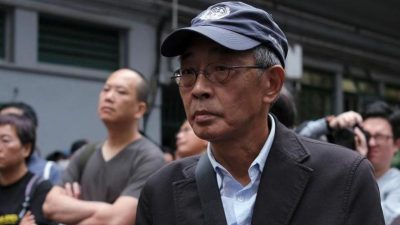
Dissident Hong Kong Bookseller Lam Wing-kee Dies at 70
Dissident Hong Kong bookseller Lam Wing – Lam Wing-kee, a prominent Hong Kong bookseller known for his activism, has passed away at the age of 70. He succumbed to lung cancer while being treated at Mackay Memorial Hospital in Taipei, according to regional media reports. His death marks the end of a life dedicated to challenging authority and defending free speech in Hong Kong, a city that has long been a hub for political dissent.
From Protests to Exile
Lam’s journey as a dissident began in 2015 when he was arrested in mainland China for distributing materials critical of the political establishment. He was detained for over 400 days, an ordeal that highlighted the growing scrutiny faced by Hong Kong’s independent media and cultural institutions. His case became emblematic of the broader crackdown on dissent, as Chinese authorities targeted bookshop owners and staff who published content deemed subversive.
In 2019, fearing that he might be extradited under a proposed bill allowing the transfer of suspects to mainland China, Lam fled to Taiwan. This decision was not merely personal but symbolic, as Taiwan is viewed by Beijing as a province that must eventually be reunited with the mainland. The relocation of Lam’s Causeway Bay Books store to Taipei was celebrated as a testament to the enduring spirit of freedom in the region, according to local officials.
A Voice for Democracy
After settling in Taiwan, Lam’s bookshop quickly became a gathering place for Hong Kong supporters. It served as a sanctuary where individuals could exchange ideas, express opposition to Chinese policies, and maintain connections with their homeland. His presence in Taipei was seen as a powerful reminder of the values he championed: the right to question power and the importance of cultural autonomy.
“His life bore witness to the value of freedom of expression, and to the fear and suffering inflicted by authoritarian repression,” noted Taiwan’s President Lai Ching-te in a Facebook post following Lam’s death. “He chose not to remain silent. Instead, he reopened Causeway Bay Books in Taiwan, turning it into a place where friends from Hong Kong could gather, speak out, and support one another,” the leader added, underscoring the significance of Lam’s exile.
During his final BBC interview, Lam reflected on the principles that guided his activism. “Everyone has their own values,” he said. “You can’t go against your values, nor can you betray others. If you believe something is right, you should continue to stick to it. It’s not like you’re harming anyone. If everyone could do that, this would of course be a better place.” These words, delivered in 2023, encapsulated his unwavering commitment to the cause.
Historical Context and Political Impact
The 2015 detention of Lam and others was part of a larger campaign by Chinese authorities to silence critics in Hong Kong. Bookstores, often seen as cultural landmarks, became targets of this effort. The closure of Causeway Bay Books in 2015 was a pivotal moment, as it signaled the mainland’s determination to suppress dissent through economic and legal pressure.
Lam’s arrest was followed by a televised confession, which he later claimed was carefully rehearsed to appease Beijing. This incident sparked international concern and intensified the debate over Hong Kong’s autonomy. By 2019, the proposed extradition bill had become a catalyst for mass protests, with Lam’s case serving as a rallying point for demonstrators who feared the erosion of civil liberties.
The protests, which lasted months, were fueled by fears of Chinese influence over Hong Kong’s legal and political systems. Lam’s exile symbolized the stakes of these debates, as he became a figure representing the struggle for self-determination. His story also underscored the broader tension between Hong Kong and mainland China, with the former seeking to preserve its unique identity and the latter aiming to extend its control.
Legacy and Defiant Memory
Although Lam’s physical presence in Hong Kong had been lost, his legacy endured. His bookshop in Taipei remained a beacon for those inspired by his courage. The phrase “banning books makes them more popular,” which he once used to describe the effect of censorship, became a mantra among activists. This sentiment echoed the idea that repression could inadvertently amplify the message of those it sought to silence.
As the years passed, Lam’s contributions to the fight for free expression were remembered as part of Hong Kong’s defiant history. His actions in 2015 and 2019 not only shaped the course of the city’s protests but also left an indelible mark on its cultural resistance. Even after his death, the story of his journey from bookseller to dissident continues to inspire new generations of advocates for freedom.
“The banning of books makes them more popular,” Lam once remarked, capturing the paradox of censorship. This insight, shared during his final BBC interview, resonated with those who saw his exile as a testament to the power of ideas. Despite the challenges he faced, he remained steadfast in his belief that the truth, once spoken, could never be fully erased.
Reflecting on a Decade of Resistance
As Hong Kong’s protests enter their second decade, the memory of figures like Lam Wing-kee remains central to the narrative of resistance. His life and work illustrate the personal sacrifices required to defend democratic ideals in the face of authoritarian measures. The events of 2015 and 2019, which marked key turning points in Hong Kong’s political history, are now studied as part of the city’s enduring struggle for autonomy.
While the extradition bill was eventually withdrawn, its legacy lingered. Lam’s story became a symbol of the risks faced by those who challenge the status quo. His bookshop in Taipei, now a place of pilgrimage for Hong Kong supporters, stands as a reminder of the resilience of free speech. The impact of his actions extends beyond his lifetime, shaping the discourse on Hong Kong’s future and the role of booksellers in political movements.
In the end, Lam’s death was not just a loss for his family but a moment of reflection for a city divided by its own history. His life, marked by courage and conviction, continues to inspire. As Taiwan’s leaders mourned his passing, they also celebrated the role he played in preserving the spirit of democracy in Hong Kong, even in exile. The fight for freedom, though ongoing, finds its roots in the sacrifices of individuals like Lam Wing-kee.
