Four-time Tour de France winner Froome retires
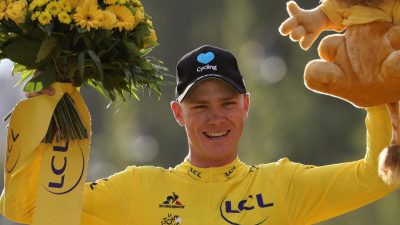
Chris Froome Ends Career After Life-Threatening Crash
Four time Tour de France winner – Chris Froome, the British cyclist who claimed four Tour de France titles, has officially retired from professional racing. The decision comes following a severe accident in August 2025 that left the 41-year-old rider with multiple injuries, including five fractured ribs, a collapsed lung, and a broken vertebra in his lower back. The incident, which occurred during a high-speed collision with a road sign, marked the end of an era for one of cycling’s most decorated athletes. Froome’s wife revealed that doctors identified a pericardial rupture—a tear in the heart’s protective sac—during his post-crash surgery, though it was successfully repaired.
A Legacy of Triumph and Innovation
Froome’s career is defined by a combination of raw talent, strategic brilliance, and scientific precision. With seven Grand Tours to his name, including four Tour de France victories, he remains one of the sport’s most accomplished riders. His achievements span a remarkable 13-year span, during which he not only secured the prestigious yellow jersey but also redefined the approach to training and race tactics. The Kenyan-born cyclist, who switched to British nationality in 2008, became a symbol of British cycling’s rise to global prominence. His time trial medals at the London 2012 and Rio 2016 Olympics further cemented his status as a multi-faceted talent.
“Unfortunately, there was that crash last summer—that was not the way I wanted it to end. But even then, I knew it was over,” Froome told Belgian broadcaster Sporza.
Froome’s first Tour de France win in 2013 was a breakthrough moment, propelling him into the spotlight as a dominant force. His subsequent victories in 2015, 2016, and 2017 solidified his place among the sport’s elite. Only four cyclists have ever claimed more than four Tour titles: Jacques Anquetil, Bernard Hinault, Miguel Indurain, and Eddy Merckx. Beyond the Tour, Froome also triumphed in the Giro d’Italia (2018) and the Vuelta a España (2011, 2017), while securing two Olympic bronze medals in the individual time trial. His contributions to the sport earned him an OBE in 2015, recognizing his impact on cycling’s development.
The 2016 “Running Finish” That Captured the World
One of Froome’s most iconic moments occurred during the 2016 Tour de France. On stage 12, a dramatic crash with a motorbike on Mont Ventoux left him unable to ride. Forced to walk the final stretch of the race, he covered over a kilometer on foot before grabbing a neutral service bike. When that failed, he switched to a third replacement from the Team Sky car, ultimately crossing the finish line with a mix of determination and disbelief. The scene, captured on global television, became a defining image of his resilience.
“I told myself, ‘I don’t have a bike and my car is five minutes behind with another bike—it’s too far away, I’m going to run a bit,’” he recalled afterward.
Despite the physical toll, Froome’s 2016 victory showcased his ability to adapt under pressure. His unique racecraft, blending precision with instinct, often turned the tide in his favor. However, his 2017 season was shadowed by an anti-doping investigation. A test revealed elevated levels of salbutamol, a legal asthma medication, in his urine. Though initially controversial, the World Anti-Doping Agency (WADA) later concluded there was no rule violation, recommending the case be dismissed. This episode highlighted the fine line between performance-enhancing use and fair competition.
Transition and Transition Challenges
Froome’s retirement from Team Ineos in 2020 followed a period of uncertainty. After leaving the team, he joined Israel-Premier Tech, aiming to rebuild his form. Yet, the transition proved difficult. A 2019 crash, which left him with multiple injuries, hindered his ability to replicate the consistency of his earlier years. Despite efforts to recover, he was omitted from Israel-Premier Tech’s 2022, 2023, and 2024 Tour de France squads. By November 2025, the team finalized his exit, signaling the end of his professional journey.
While Froome’s achievements in the Grand Tours are unparalleled, his career also featured significant contributions to other events. He claimed two stages of the Giro d’Italia and five in the Vuelta a España, alongside three Criterium du Dauphine wins. His time trial expertise, honed through years of practice, earned him a place in the Olympic podium and the Road World Championships. Yet, his most enduring legacy lies in the Tour de France, where he revolutionized the sport’s tactics and training methods.
The Science Behind the Success
Froome’s dominance was not just a product of natural ability but also of meticulous preparation. He became a pioneer of the “Sky Train” strategy, a term describing the ultra-disciplined method of using domestiques to create a powerful pace that outmaneuvered competitors. This approach, combined with his scientific training regimen, set new standards in cycling. “I knew I had a chance to make a big impact on this sport when I started training with Italian teams. They would finish a ride and then hit the beer and pizza,” he once remarked, highlighting his unconventional mindset.
His innovative techniques extended to race dynamics. During the 2016 Tour, Froome famously descended Mont Ventoux in a “super tuck” position, crouching on the top tube of his bike while pedaling. This aerodynamic maneuver, now banned due to safety concerns, was a testament to his willingness to push boundaries. Such moments underscored his role as both a competitor and a trailblazer, influencing how modern cyclists approach performance and strategy.
From Nairobi to the World Stage
Froome’s journey to the top of cycling began in Nairobi, Kenya, where he was born to British parents. His early talent caught the attention of Team Sky, who signed him in 2010 as part of Sir Dave Brailsford’s ambitious project to secure the first British Tour de France victory. This partnership fueled Froome’s meteoric rise, culminating in his historic 2013 win. His legacy continues to inspire, even as he steps away from the race.
Though his final professional race came to an end in 2025, Froome’s influence on the sport remains profound. As the joint second-most successful Tour de France winner, he shares the record with Tadej Pogacar, the current modern-day legend. His career, marked by triumphs and challenges, leaves an indelible mark on the history of cycling. From the Nairobi streets to the grand stages of the Tour de France, Froome’s story is one of perseverance, innovation, and global success.
With his retirement, the cycling world bids farewell to a rider who redefined what it means to be a Grand Tour champion. His legacy will be remembered not just for the four yellow jerseys, but for the way he transformed the sport through science, strategy, and sheer determination. Froome’s journey, though now complete, will continue to shape the future of professional cycling for years to come.
