Iran begins public mourning for Ayatollah killed in February
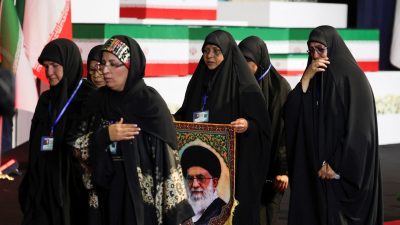
Iran Begins Public Mourning for Ayatollah Killed in February
Iran begins public mourning for Ayatollah – Iran is marking a period of public mourning and ceremonial processions for its former Supreme Leader, Ayatollah Ali Khamenei, following his death in strikes attributed to the United States and Israel. More than four months after the tragic event, the nation has entered a phase of solemn observance, with rituals spanning multiple days and drawing participation from across the country. The mourning period includes a series of events centered around the display of Khamenei’s body, as well as symbolic gestures to honor his legacy and reaffirm national unity.
At the heart of the ceremonies is the plan to lay Khamenei’s remains in Tehran’s Grand Mosalla, where they will be publicly viewed starting Friday. This act, known as lying in state, is a traditional practice in Iran to allow citizens to pay their respects before the final burial in Mashhad, his hometown, scheduled for next Thursday. The Iranian authorities have emphasized that the event will be a historic milestone, referring to it as the “funeral of the century” to underscore its scale and significance. They anticipate up to 20 million attendees, highlighting the deep emotional and spiritual connection the late leader holds for the Iranian public.
The funeral schedule has been meticulously planned, with the first phase beginning at 06:00 on Saturday at Tehran’s Imam Khomeini Mosalla. This location, a central site for religious gatherings, will serve as the starting point for a six-day series of ceremonies. Visitors will have the opportunity to express their condolences until Sunday afternoon, when the processions will conclude. The event is also expected to draw international attention, with delegates from various countries attending to participate in the final rites.
“Khamenei’s coffin will be displayed on an elevated platform, with crowd flows designed to allow visitors to enter and leave within 15 to 20 minutes,” said Hassan Hassanzadeh, commander of the Tehran-based Mohammad Rasulullah Corps, which is overseeing the funeral arrangements.
During this time, the nation will observe strict measures to facilitate the mourning process. Public and private offices in Tehran will close from Saturday through Monday, while traffic restrictions will limit vehicle access to the city center. The airspace over Tehran will also be partially closed from Friday, with full closure planned for Monday. These logistical changes aim to create a clear path for citizens to honor the late leader without disruptions.
Following the initial ceremonies in Tehran, the funeral events will expand to Qom, a city located south of Tehran and home to significant Shia religious institutions. A senior cleric will lead the prayers at Jamkaran, one of Iran’s most revered spiritual sites, symbolizing the deep-rooted religious culture that underpins the nation’s mourning. The processions will then travel to Najaf, Iraq, where Khamenei’s body will be laid at the shrine of Imam Ali, the first imam in Shia Islam. From there, the route will continue to Karbala before returning to Iran for the final rites.
The inclusion of Iraq in the funeral itinerary reflects the enduring ties between Iran and its Shia communities in the region. Iraqi officials have expressed support for the event, which is seen as a testament to Khamenei’s influence across the broader Muslim world. Iranian Foreign Minister Abbas Araghchi visited Baghdad to coordinate the arrangements, noting that the funeral carries symbolic importance beyond national borders. Analysts suggest the ceremony serves as a unifying force, reinforcing Iran’s religious and political connections with other Shia-majority nations.
As the nation mourns, questions remain about the leadership transition. Khamenei was succeeded by his son, Mojtaba, who has remained largely absent from public view since taking over the role. This absence has sparked speculation about his role in the funeral ceremonies, particularly whether he will attend the events in person. Last week, Ali Akbar Pourjamshidian, the secretary of the organizing committee, indicated that the decision regarding Mojtaba’s participation will be announced by the offices of the armed forces commander-in-chief and the supreme leader.
The funeral prayers will also present an intriguing question: who will lead the ceremony? In Shia tradition, the role of the prayer leader carries both religious and political weight, often serving as a symbol of authority and continuity. While the original plan was for Mojtaba to assume this responsibility, the absence of a clear designation has left room for interpretation. Some believe the position may be temporarily held by another prominent cleric, while others speculate it could be a strategic move to consolidate support for the new leader.
The mourning activities are not limited to Iran. The nation is currently in a fragile ceasefire with the United States, which began after a preliminary agreement was signed in June. This pause in hostilities allows for a more focused national effort, with the funeral events serving as a unifying moment for both the Iranian populace and its international allies. The ceremony is also expected to draw participation from countries such as Pakistan, whose Prime Minister, Shehbaz Sharif, will attend the proceedings in Mashhad. This global attendance underscores the respect Khamenei has garnered beyond Iran’s borders.
Volunteers have been actively preparing for the event, ensuring that the logistics of the mourning period are meticulously executed. One such task involves the distribution of bread in designated cooling and rest areas near the Imam Khomeini Grand Mosalla, a gesture meant to sustain attendees during the extended hours of observance. These efforts highlight the organized scale of the event, which has been described as a national pilgrimage rather than a simple funeral.
The mourning period will extend well beyond the immediate ceremonies, with events planned to continue for 40 days. This timeframe is meant to honor Khamenei’s legacy and keep his memory alive through commemorative activities. The celebrations will culminate with a final anniversary of his burial, ensuring that his impact on Iranian society and global Shia communities is not forgotten.
Despite the grandeur of the funeral processions, the absence of Mojtaba Khamenei from public life has raised concerns about the stability of the leadership transition. While the former leader’s iron grip on power is now over, his son’s quiet ascension to the role of supreme leader has left many to wonder about the future direction of Iran. As the nation processes its grief, the public will also be watching closely to see how this new chapter unfolds under Mojtaba’s guidance.
