
Court Rules Pentagon’s Designation of Anthropic as Supply-Chain Risk Was Unlawful Retaliation
Constantvpn.com – A federal district court has delivered a sweeping rebuke to the Trump administration’s decision to label AI startup Anthropic a national supply-chain risk, finding that the move was both “illegal and baseless.” The ruling, issued by US district judge Rita Lin, marks a rare judicial intervention in the intersection of artificial intelligence policy, military procurement, and constitutional free-speech protections. It also signals that the executive branch cannot weaponize procurement rules to silence critics of defense spending priorities.
The Designation and What Triggered It
In February, the Department of Defense formally designated Anthropic — the maker of the Claude family of large language models — as a supply-chain risk. That classification, rooted in statutes originally crafted to scrutinize foreign firms operating in countries perceived as threats to American interests, had never before been applied publicly to a domestic company. The designation effectively ordered every contractor doing business with the US military to stop using Anthropic’s technology, a move that would have severed the startup’s access to a major revenue stream and a high-profile government partnership.
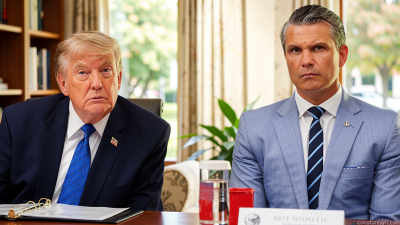
The trigger was a straightforward commercial disagreement. Anthropic declined to grant the military unrestricted rights to deploy its models in contexts the company considered unsafe or constitutionally problematic, including autonomous weapons systems and domestic surveillance operations. The Pentagon, under Secretary Pete Hegseth, treated that refusal as an unacceptable constraint on operational flexibility. The White House went further, publicly branding Anthropic “a radical left, woke company” attempting to dictate military activity, and insisted the armed forces answered to the US Constitution, “not any woke AI company’s terms of service.”
The Judge’s Reasoning
Judge Lin’s opinion dismantled the government’s justification on multiple fronts. She found that the Defense Department acted unlawfully when it compelled firms holding military contracts to boycott Anthropic’s products. More pointedly, she rejected the notion that invoking national security automatically immunizes executive action from judicial review.
“Citing national security is not a blank check to punish and retaliate against government critics.”
In an earlier phase of the litigation, Lin had already characterized the administration’s conduct as an attempt to “cripple” the company and “chill public debate” over how AI should be integrated into defense operations. She went on to describe the episode as what appeared to be “classic First Amendment retaliation,” a finding that elevates the case beyond a routine contract dispute into the realm of constitutional speech protection.
Anthropic’s Position and Response
In its lawsuit, Anthropic argued that the government’s actions were “unprecedented and unlawful,” that its commercial operations had been materially harmed, and that its First Amendment right to free expression had been violated. The company maintained that its Claude models were not yet reliable enough to be safely embedded in weapons systems and that it opposed deploying its technology for domestic surveillance, which it characterized as a violation of civil liberties.
Following the ruling, Anthropic welcomed the decision. A company spokesperson framed the next chapter in constructive terms, saying the startup was focused on “working productively with the government to harness AI for our national security so all Americans benefit from this technology.” The Pentagon and the White House had been contacted for comment on the ruling.
Why the Ruling Matters Beyond One Company
The decision lands at a moment when every major defense department is racing to embed large language models into command-and-control systems, logistics planning, intelligence analysis, and autonomous targeting. The question of whether a private AI vendor can set conditions on how its models are used — particularly in lethal or surveillance contexts — is no longer hypothetical. It is a live procurement negotiation in dozens of Pentagon programs.
By ruling that the supply-chain-risk tool cannot be repurposed as a retaliatory sanction against a domestic firm that simply said “no” to certain military applications, Judge Lin has drawn a line that other companies may cite. If a startup can refuse to license its models for autonomous weapons without facing a de facto government boycott, the negotiating dynamic between AI vendors and the Department of Defense shifts materially. Conversely, if the administration appeals and prevails, the precedent would embolden future designations aimed at companies whose product choices conflict with defense priorities.
The First Amendment dimension adds another layer. The judge’s language about chilling debate over military AI use suggests the court views public disagreement about how autonomous systems should be governed as protected speech, not merely a commercial bargaining position. That framing could protect not only Anthropic but any vendor, researcher, or advocacy group that publicly questions the pace or scope of AI integration into armed forces.
What Happens Next
The ruling does not automatically unwind every contract clause or procurement directive issued after the February designation. Anthropic will likely seek further relief to restore lost business relationships and recover damages. The Department of Defense retains the option to appeal to the circuit court, where the question of whether supply-chain-risk statutes can be applied to domestic firms will receive a second, potentially broader, examination.
For the broader AI industry, the case underscores a tension that will recur throughout the decade: the military’s need for rapid access to cutting-edge models versus the vendors’ interest in controlling where and how their technology operates. Judge Lin’s opinion suggests that the answer, at least for now, cannot be a unilateral government designation wielded as punishment for disagreement.
Related Reading
Frequently Asked Questions
What is Trump administration illegally retaliated against Anthropic?
Trump administration illegally retaliated against Anthropic is the main topic of this guide. The article explains the context, practical details, and next steps readers should understand.
Why does Trump administration illegally retaliated against Anthropic matter?
Trump administration illegally retaliated against Anthropic matters because readers are looking for a useful answer, not just a short summary. Good content should match search intent and help them decide what to do next.