
Canada Walks Away From Trade Talks as Retaliation Tests the Boundaries of American Coercion
Constantvpn.com – When Prime Minister Mark Carney’s delegation packed its briefcases and flew home over the weekend, ending negotiations over a successor trade framework with Washington, the rupture sent shockwaves through two economies that exchange more than $872 billion (£640 billion) in goods and services every year. The abrupt termination of talks was followed swiftly by a new round of tariffs between the world’s longest shared border neighbours, marking the sharpest escalation yet in a dispute that has simmered since Donald Trump first took office.
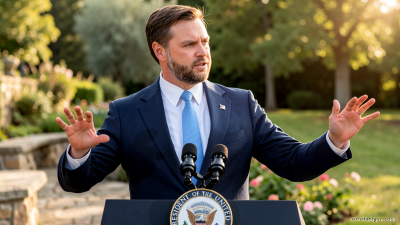
Yet the proximate trigger for Carney’s decision to walk out of the room may have been something far less formal than a tariff schedule. Two days before the talks collapsed, Vice-President JD Vance was addressing a private fundraising audience when, according to an audio recording subsequently leaked to the Canadian Press, he offered a colourful portrait of his Canadian counterpart.
“He’s a very sweet guy,” Vance reportedly said. “He comes in and puffs his chest out and says: ‘I’m going to, like, out-tough Donald Trump.'”
Vance called the imagined posture “hilarious,” adding that the Canadians ultimately “climb down on a lot of issues.” The remarks drew substantial coverage across Canadian media and, while diplomats on both sides would not publicly confirm they poisoned the atmosphere, their timing made them impossible to ignore. Whatever the precise calculus behind Carney’s decision to suspend negotiations, the vice-president’s comments did nothing to soften the mood in Ottawa.
A Pattern of Pressure That Predates the Second Term
The current confrontation did not emerge from a vacuum. Friction between Washington and Ottawa stretches back to the first Trump administration and the fraught negotiations that produced the United States-Mexico-Canada Agreement (USMCA), which replaced the 1990s-era North American Free Trade Agreement. Personal animosity between Trump and then-Prime Minister Justin Trudeau compounded the institutional tensions, and as Trump prepared his return to the White House in late 2024, he dismissed Trudeau as a mere “governor” and referred to Canada as America’s “51st State.”
Beneath those jabs lay a coherent geopolitical thesis: the United States is, above all, a hemispheric power entitled to shape the political, military, and economic conduct of its immediate neighbourhood. In that framework, Canada and Mexico — two of America’s largest trading partners — were natural early targets for pressure. Administration officials in state, treasury, and commerce departments articulated a doctrine in which commercial leverage and national defence are inseparable.
“If you listen to really anybody in state, treasury, or commerce [departments], you will hear the phrase ‘economic security is national security,'” said Drew DeLong, head of corporate statecraft at the Kearney Foresight think tank.
That logic also underpinned Trump’s stated desire to acquire Greenland, extending the hemispheric calculus beyond the continental border. Under this worldview, a trading partner that contributes what Washington deems too little to regional defence while reaping disproportionate commercial benefit becomes a candidate for coercion rather than partnership.
Where the Limits of Power Become Visible
By early this year, however, North American trade negotiations had already stalled in fits and starts, and Trump’s attention had drifted toward military interventions in Venezuela and then the Middle East. Across every theatre, the administration’s core strategic line remained consistent: the United States is a dominant power capable of imposing its will for national benefit. What the Canadian episode now exposes is the other half of that equation — the limits of that power.
Trump’s second term has functioned, in effect, as a continuous stress test of those limits, occasionally revealing precisely where they sit. The parallel with Iran is instructive. In both cases, the United States faces a counterpart that, despite possessing far less aggregate power, retains credible means of retaliation. Tehran’s leverage rests on targeting American allies and threatening maritime chokepoints such as the Strait of Hormuz. Ottawa’s leverage, by contrast, is economic and structural: the ability to restrict American access to Canadian energy supplies and critical minerals, to impose targeted tariffs, and to mobilise consumer boycotts of American goods.
Tuesday’s announcement of “dollar-for-dollar” retaliatory tariffs represents the first concrete step in that escalation. Future measures could tighten restrictions on cross-border energy flows, gate access to lithium, nickel, and other minerals essential to American manufacturing and defence supply chains, or coordinate public-sector procurement away from US suppliers. For Canadian firms already bracing for a prolonged trade war, the stakes are existential — as one business owner put it, “Half my business will be gone.”
The Miscalculation That Could Outlast the Presidency
If Trump assumed the Canadians would fold under American pressure — as numerous US allies have done over the preceding nineteen months — he may have misread the room. Carney’s willingness to walk away, to absorb short-term economic pain, and to signal that Ottawa will not simply absorb unilateral demands represents a qualitative shift in how Canada positions itself within the Western alliance. The consequences of that shift, and of any prolonged tariff war between the two largest economies on the North American continent, could persist well beyond the remainder of the current presidency.
For the broader international order, the episode carries a warning. As the global system tilts toward what analysts call an “economic security theatre,” the old playbook of coercive leverage — applied indiscriminately to friend and foe alike — risks producing not compliance but durable opposition. Canada’s retaliation is, in that sense, less a trade dispute than a test of how far American power can reach before it meets a wall that does not simply climb down.
Related Reading
Frequently Asked Questions
What is Canada s retaliation tests the limit?
Canada s retaliation tests the limit is the main topic of this guide. The article explains the context, practical details, and next steps readers should understand.
Why does Canada s retaliation tests the limit matter?
Canada s retaliation tests the limit matters because readers are looking for a useful answer, not just a short summary. Good content should match search intent and help them decide what to do next.