London Stands Firm as Moscow Threatens Over British Drone Role in Ukraine War
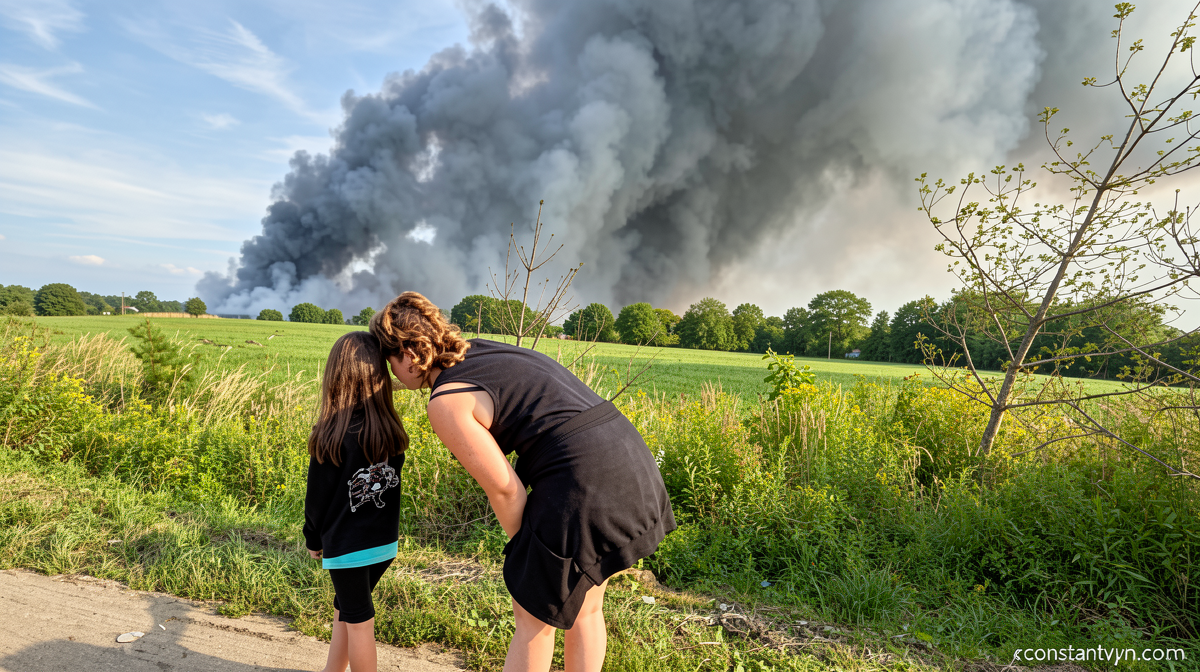
Constantvpn.com – Smoke still hung over the Koledino Industrial Park near Podolsk on Sunday when Ukrainian drones struck a Wildberries logistics facility, but the political fallout from that strike — and dozens like it — reached Westminster within hours. Prime Minister Andy Burnham made clear that Britain’s backing of Kyiv will not waver, even as the Kremlin issued its sharpest public warning yet about the cost of continued Western involvement.
“We are not fair-weather friends, we will be there in Ukraine’s hour of need and that won’t change.”
Burnham’s remarks came after Moscow confirmed that British-manufactured drones had been deployed in recent Ukrainian operations deep inside Russian territory. The Russian embassy in London went further, accusing Britain of “deliberately opting for an escalation of the Ukraine crisis” and warning that “the deeper its involvement in the conflict… the higher the price it will pay.” The embassy added that “London’s actions will inevitably carry consequences for which it will have to answer,” though it stopped short of specifying what form those consequences might take.
A War That Has Reached Into Russian Daily Life
The Kremlin’s warning lands against a backdrop of escalating Ukrainian strikes on infrastructure well beyond the front line. Oil refineries, fuel depots, and major logistics hubs have become recurring targets, disrupting domestic fuel supplies and denting an economy already strained by years of sanctions and military spending. Hundreds of drones were launched toward the Moscow region over a two-day span, according to regional authorities. Governor Andrey Vorobyov confirmed on Tuesday that a ten-year-old girl was injured and that a Wildberries warehouse sustained damage in one of the attacks.
In the south, five residents were killed in a residential area of Rostov region over the weekend. The cumulative economic toll of these strikes, as estimated by Ukrainian officials, exceeds £35 billion in damage to Russian infrastructure and commercial assets.
Britain’s Long-Standing Commitment
Asked directly about Moscow’s threat, Burnham framed the issue as continuity rather than novelty. He stressed that the UK has been supplying Ukraine with the means to defend itself since the full-scale invasion began in February 2022, a position maintained by successive prime ministers.
“We will be there in Ukraine’s hour of need.”
The Ministry of Defence reiterated that Britain remains “committed to providing the equipment Ukraine needs to defend itself against [Russian President Vladimir] Putin’s illegal invasion.” In April, the defence ministry unveiled what it described as its largest single military-aid package to date: tens of thousands of drones, including long-range strike variants, earmarked for Kyiv. Two British firms are known to have manufactured drones now in Ukrainian service, and a military source confirmed to the BBC that UK-built drones featured in the most recent wave of attacks on Russian territory.
Beyond drones, Britain has supplied Storm Shadow cruise missiles and, more recently, offered to share its emerging “Stone Cloak” electronic-jamming technology, which would allow Ukrainian forces to suppress Russian air-defence radars. Burnham told President Volodymyr Zelensky during a visit to a British naval base late last month that he “can count on the UK for as long as it takes.”
Human Cost on Both Sides of the Line
While the diplomatic exchange sharpens, the human toll continues to climb. United Nations officials recorded 437 civilian deaths in Ukraine last month — the highest monthly figure since May 2022. In the latest Russian missile barrage, seventeen Ukrainians were killed, including ten villagers in Pechenihy, a small settlement in north-eastern Ukraine where two missiles struck private homes, a café, and a post office early Tuesday. Three more died in Sumy, two in Zaporizhzhia, and two in Kherson.
On the Russian side, a foreign ministry spokesman told the Tass news agency on Tuesday that sixty-nine people, including three children, had been killed across the country in the preceding week — a reminder that the conflict’s reach now extends far beyond the contested front lines.
Strategic Stalemate and Escalation Risk
Russia still occupies roughly one-fifth of Ukrainian territory, yet its forces have made very little measurable progress on the front line for several months. The battlefield has effectively frozen into a grinding attrition contest, which is precisely why both sides are turning to deep-strike campaigns to erode the other’s economic and logistical capacity.
Moscow’s latest warning marks a rhetorical step up from earlier complaints. As far back as 2024, foreign ministry spokeswoman Maria Zakharova publicly noted that drones incorporating UK components and configurations had been used to hit Russian territory, including a fuel depot in the Kamensky district of Rostov region. The current embassy language, however, carries an explicit threat of unspecified consequences — a formulation that analysts read as a signal that the Kremlin may be weighing options beyond diplomatic protest, whether through intensified strikes on UK-linked assets, expanded cyber operations, or further escalation of the drone war itself.
For now, London’s answer is unambiguous: the support continues, the technology flows, and the political line drawn by Burnham leaves no visible room for retreat.
Related Reading
Frequently Asked Questions
What is UK supports Ukraine 100 Burnham says?
UK supports Ukraine 100 Burnham says is the main topic of this guide. The article explains the context, practical details, and next steps readers should understand.
Why does UK supports Ukraine 100 Burnham says matter?
UK supports Ukraine 100 Burnham says matters because readers are looking for a useful answer, not just a short summary. Good content should match search intent and help them decide what to do next.
